After 10 years of making and exhibiting I decided in 2009 that it was important to take time out of that continuous cycle to allow space for new ideas to develop.
The decision to go to the Royal College of Art to embark on a two year MA course led to a number of new directions. Ongoing was my interest in vessel and bowl forms and how I relate to them as objects of contemplation.
Growing up in Egypt I was surrounded by pottery forms that have changed little since the ancient times, classical forms that have filtered through the ages, touched and formed by the hand of the potter. These forms were functional storage jars and water cooling urns. It was not however until I went to El Minia College of Fine Arts that I started to really look at them. Close observation during drawing classes of still life compositions opened my eyes to the beauty and contentment that exist within a well considered and executed form.
Drawing is fundamental in training our eyes to see, the action of trying to pick up a line from a three dimensional object and marking it down on a paper is a powerful gesture that surpasses the basic skill, a projection of a line that becomes etched in our psyche as we forge an emotional and intellectual bond with such object.
The long hours spent in the drawing studio not only developed the skill needed to make a mark but, more importantly, it was a time of meditation, allowing me to free my mind from preconceptions that normally govern our perception of functional pottery. It had become increasingly obvious that objects derive their value not only from certain inherent qualities and attributes but, crucially, also from how we relate to them in a particular context. This has initiated and shaped my relationship with pottery forms ever since, seeing them as a vehicle of creativity worthy of contemplation.
When I enjoyed drawing pots back in Egypt, it never occurred to me that I would be making them.
The mark making is now a direct interaction between the hand and a lump of clay, fingers are no longer just used to hold the pencil but to exact an immediate gesture manipulating the solid mass of clay.
They become tools that are hard wired directly to our brains, forming, touching and sensing, creating a voluminous form, a container of material, thoughts and emotions.
These very tools – our fingers - become an integral part of appreciating ceramics forms when we approach them as an audience, connecting both maker and observer.
When we make, the physicality of an object is a manifestation of thoughts and emotions that we experience, a celebration of the marriage of ideas and skill. An object in my opinion should have a physical presence that invites a response on a number of levels, emotional as well as intellectual.
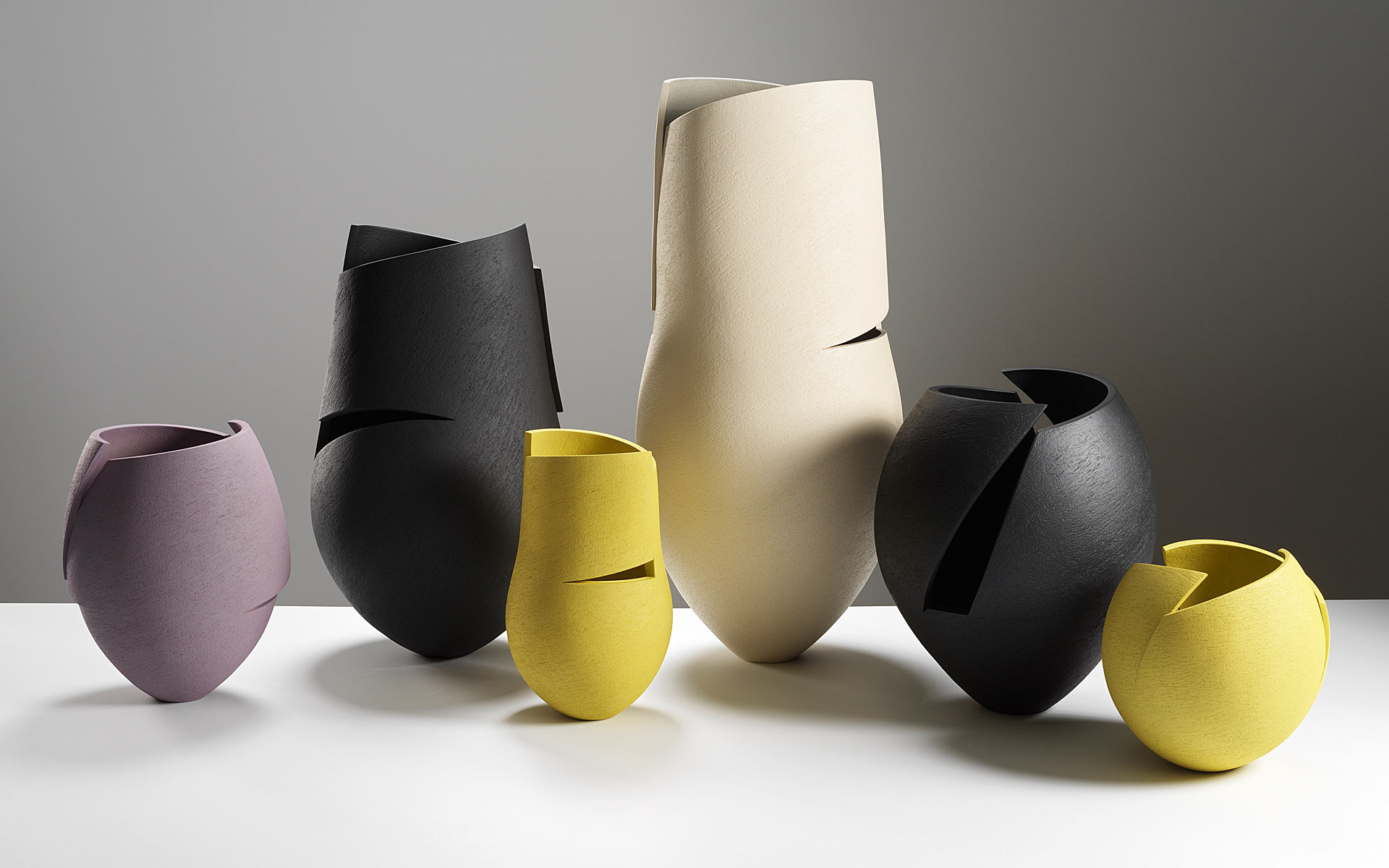
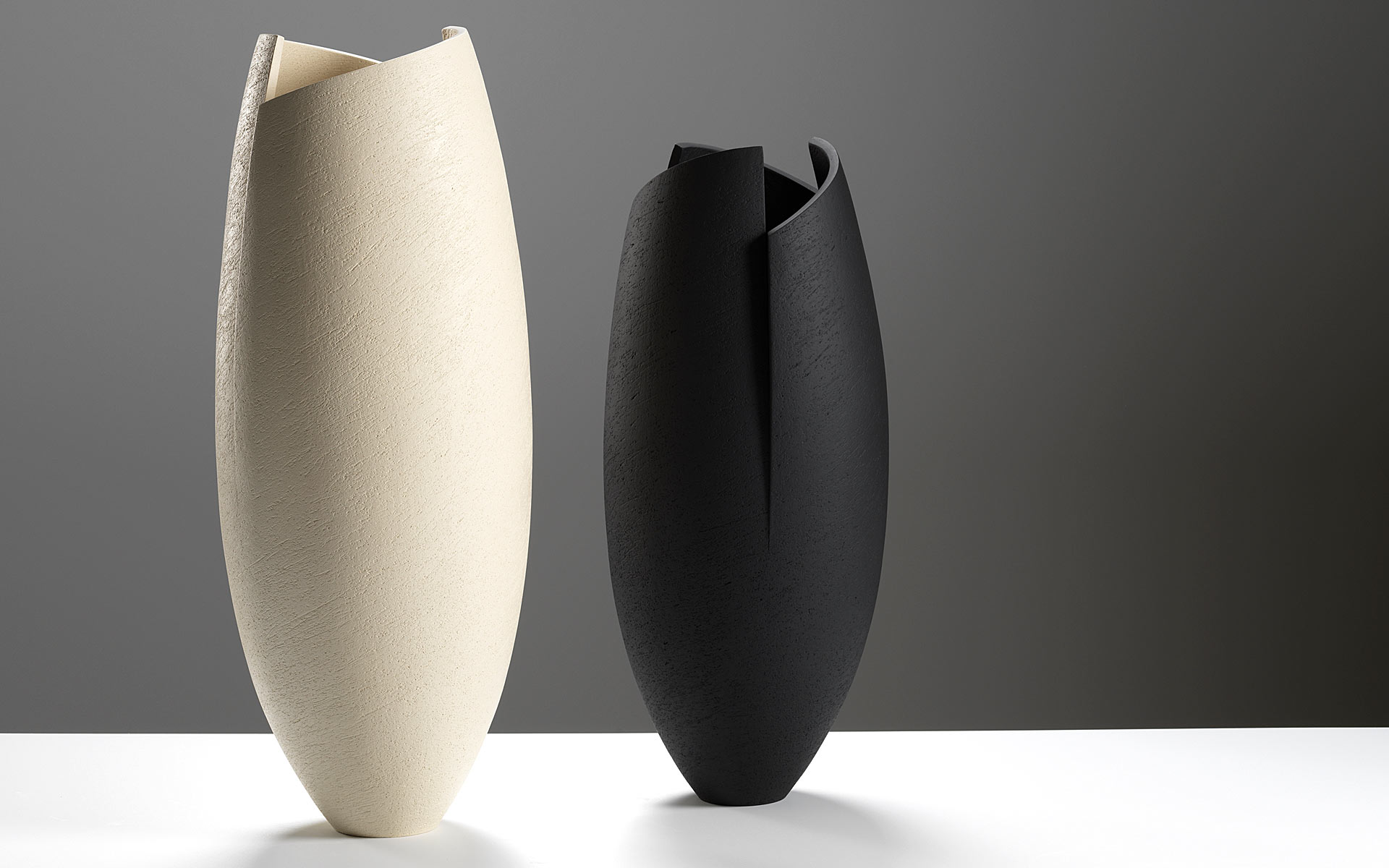
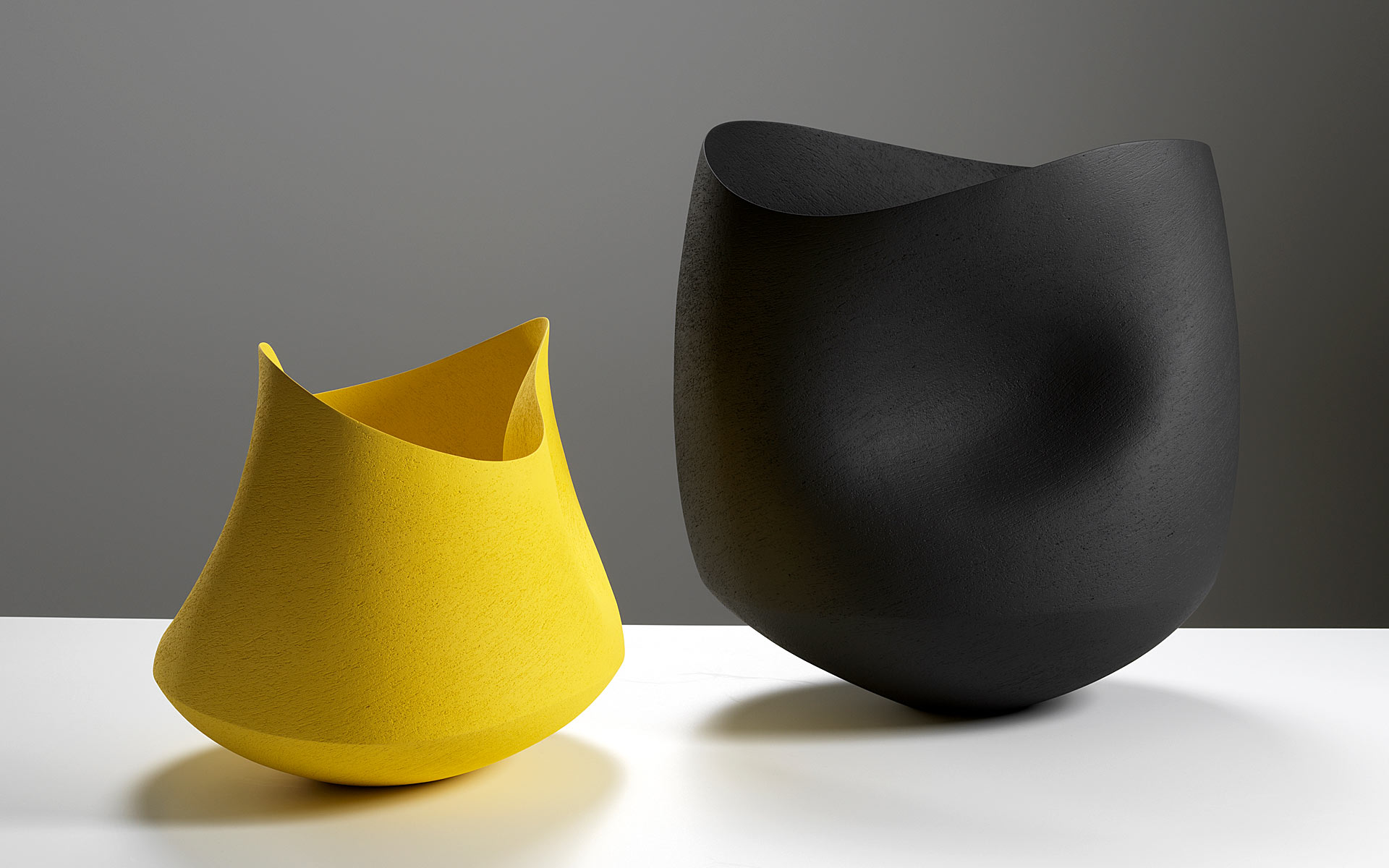
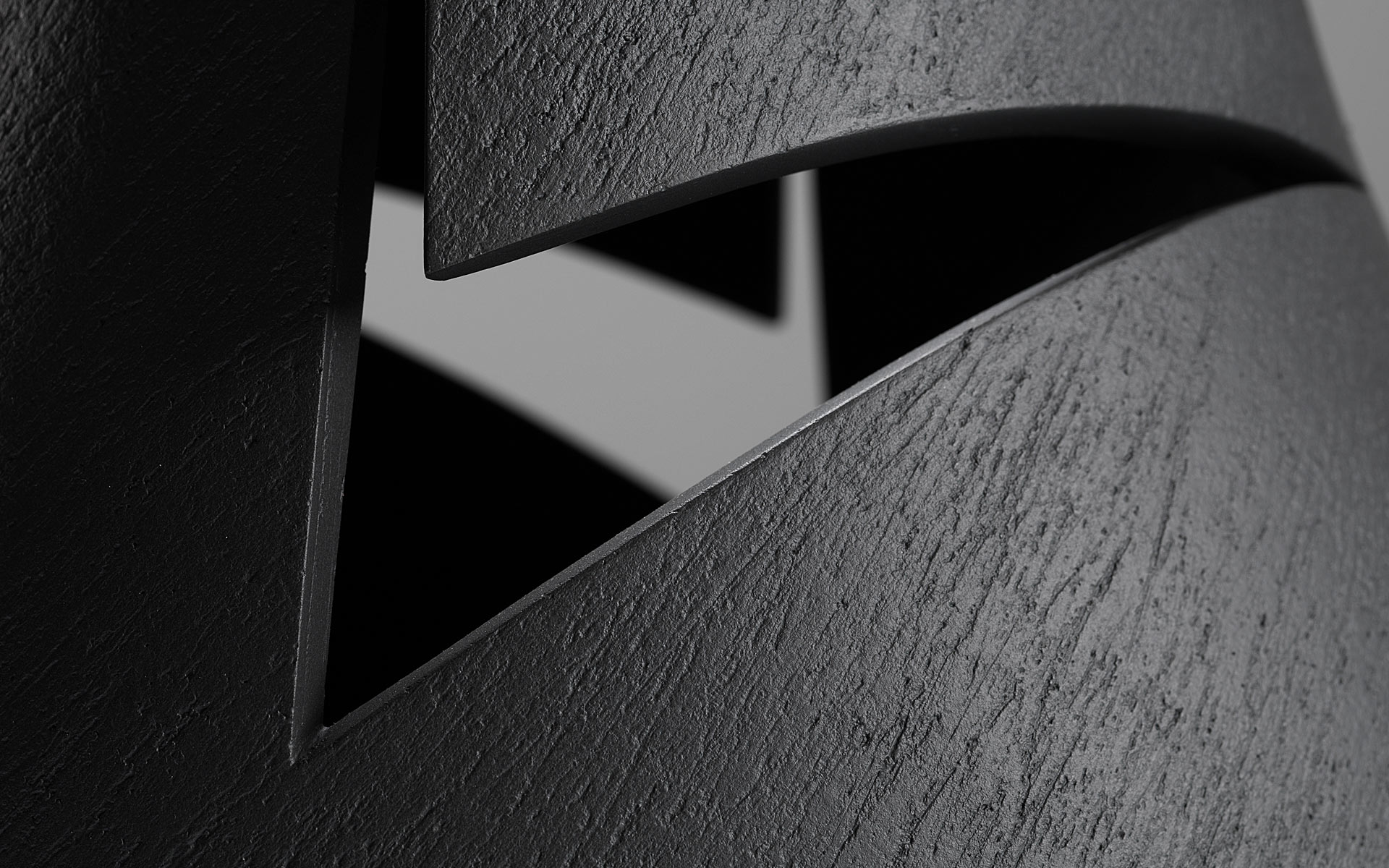
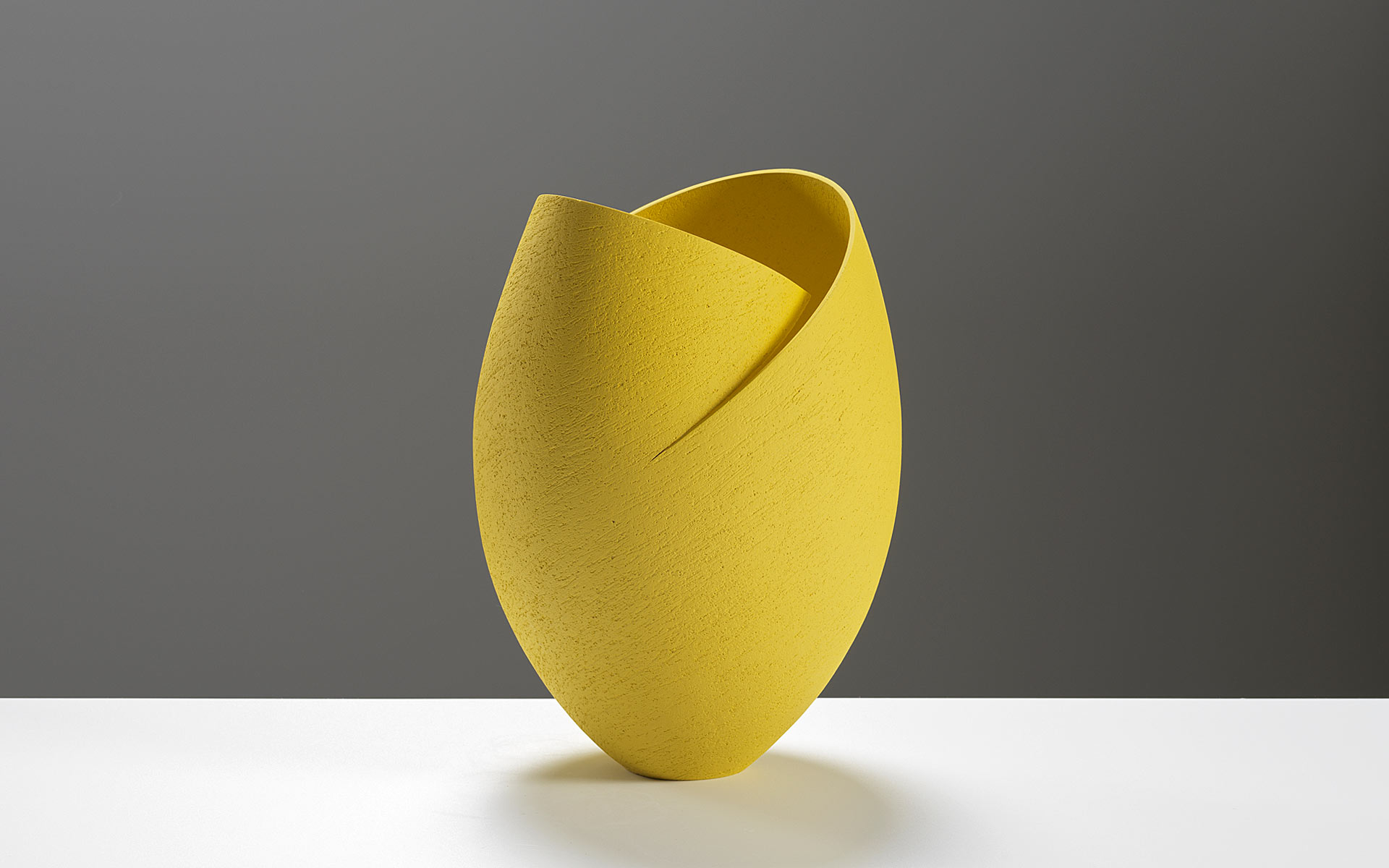
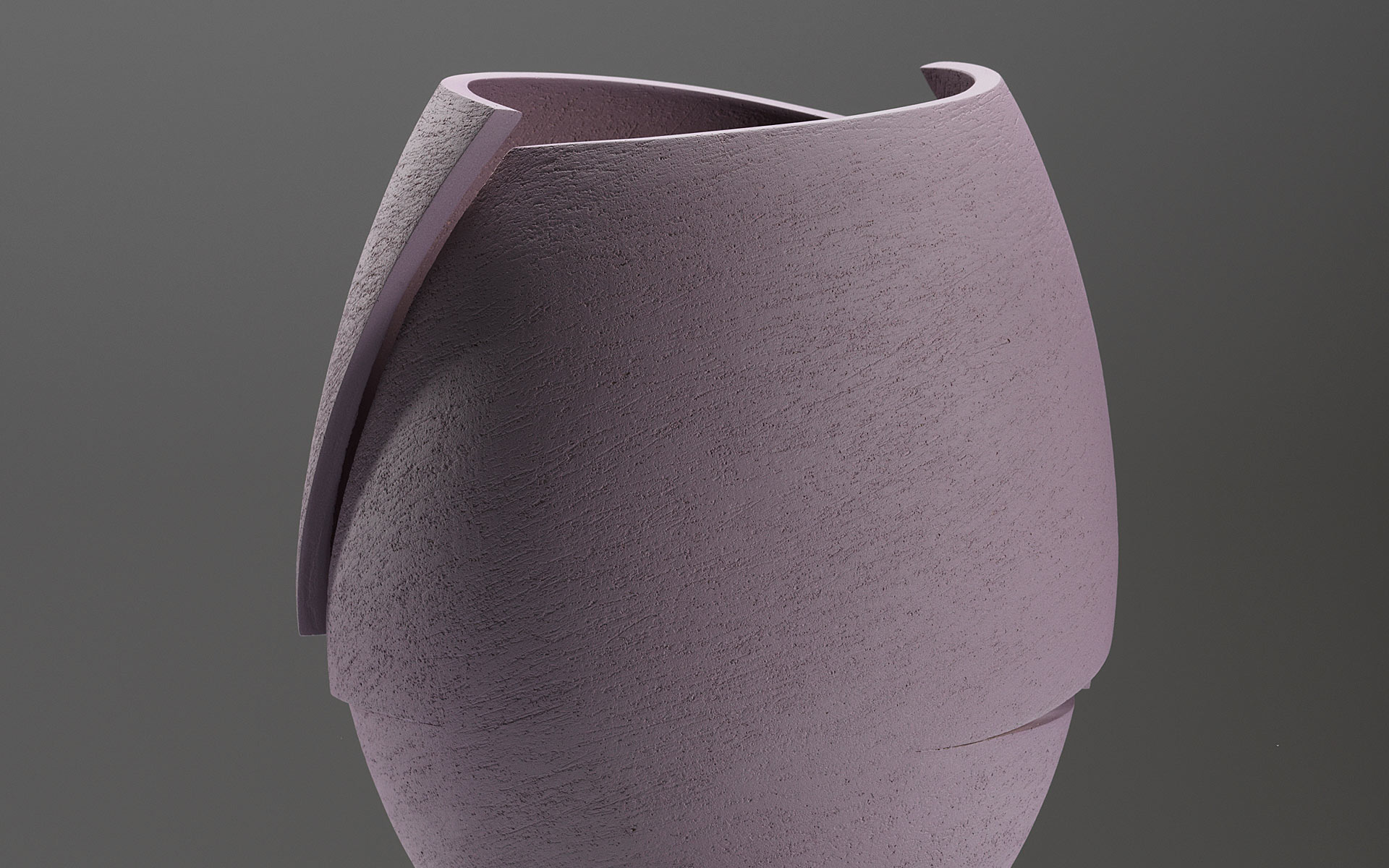
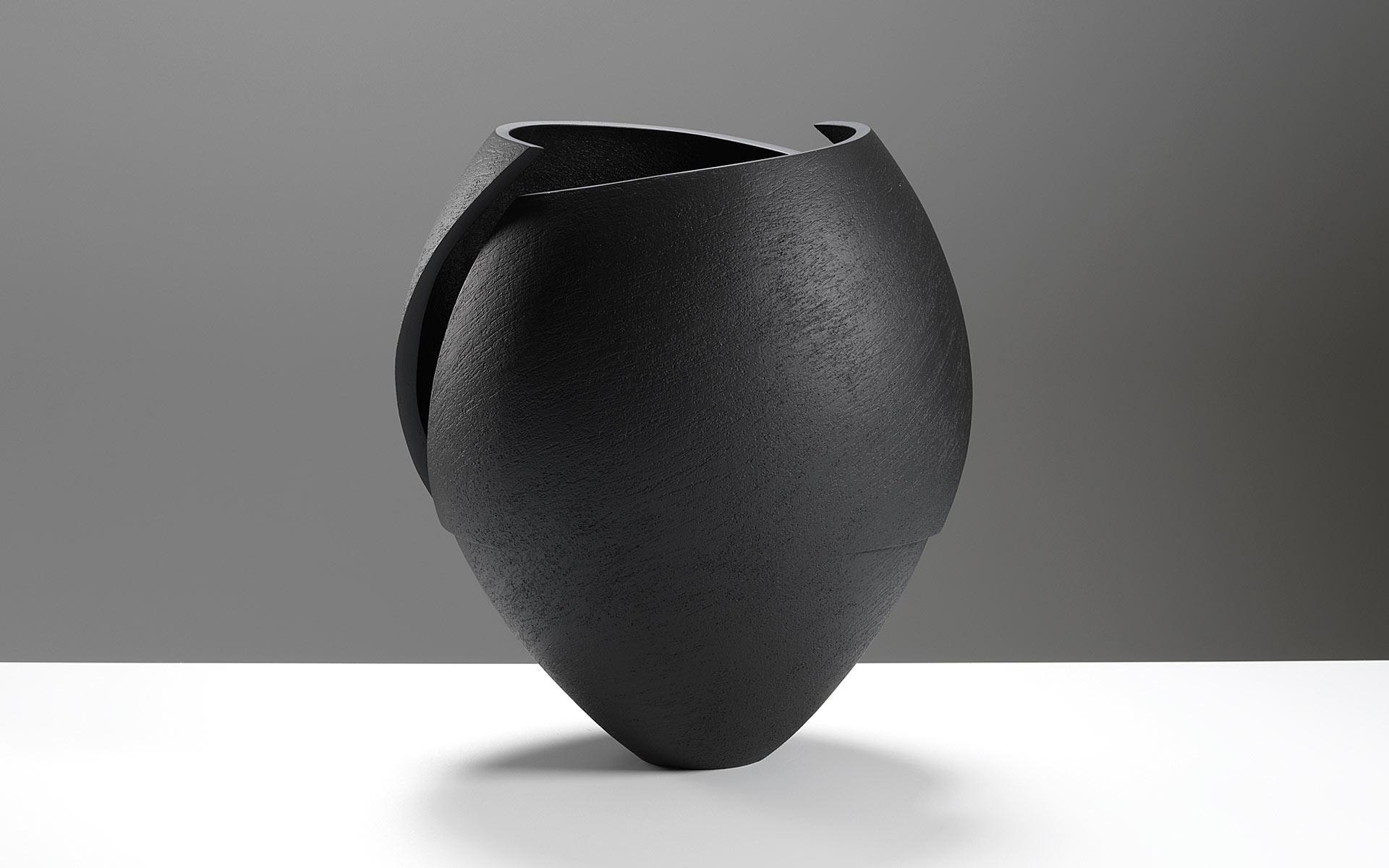
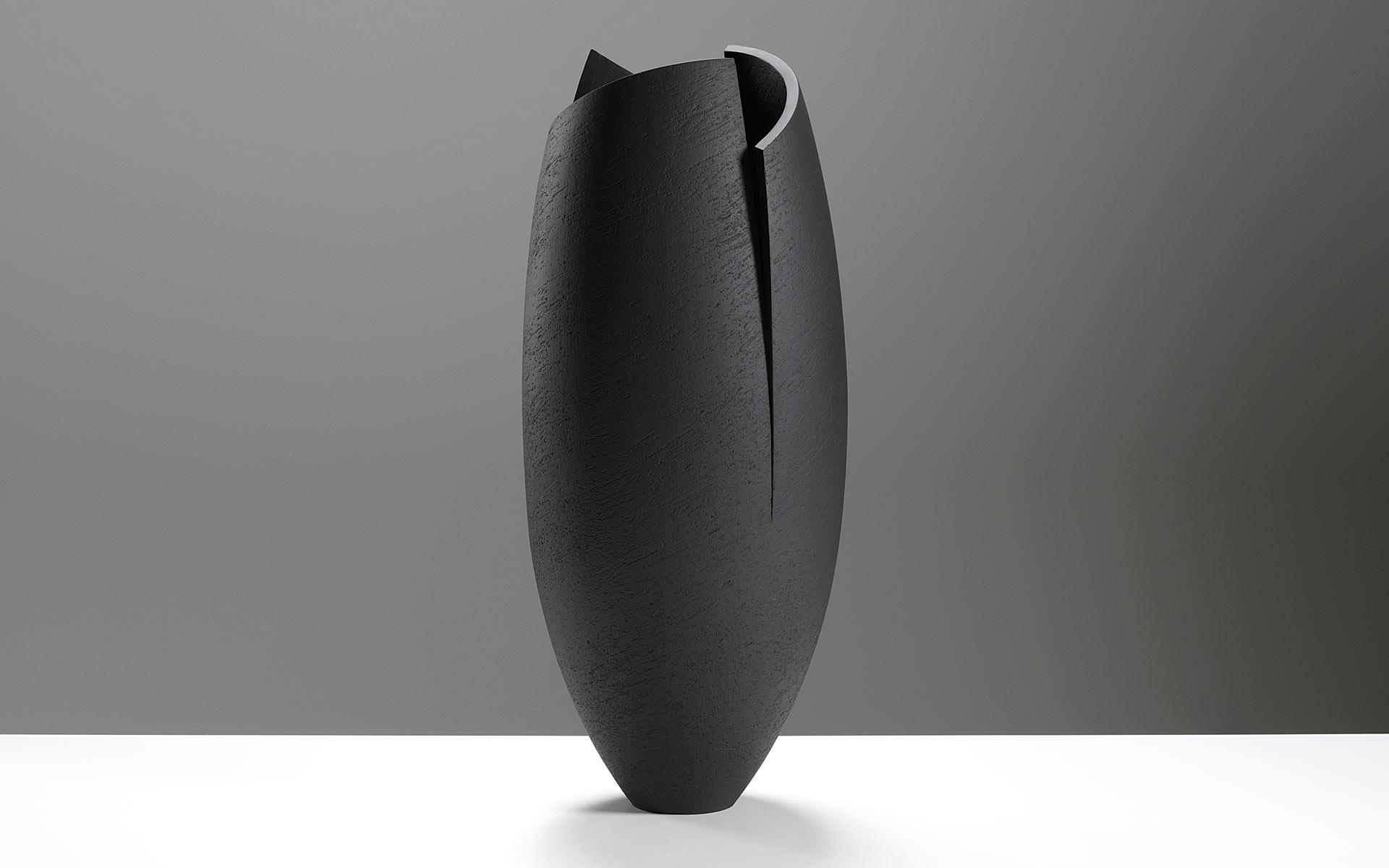
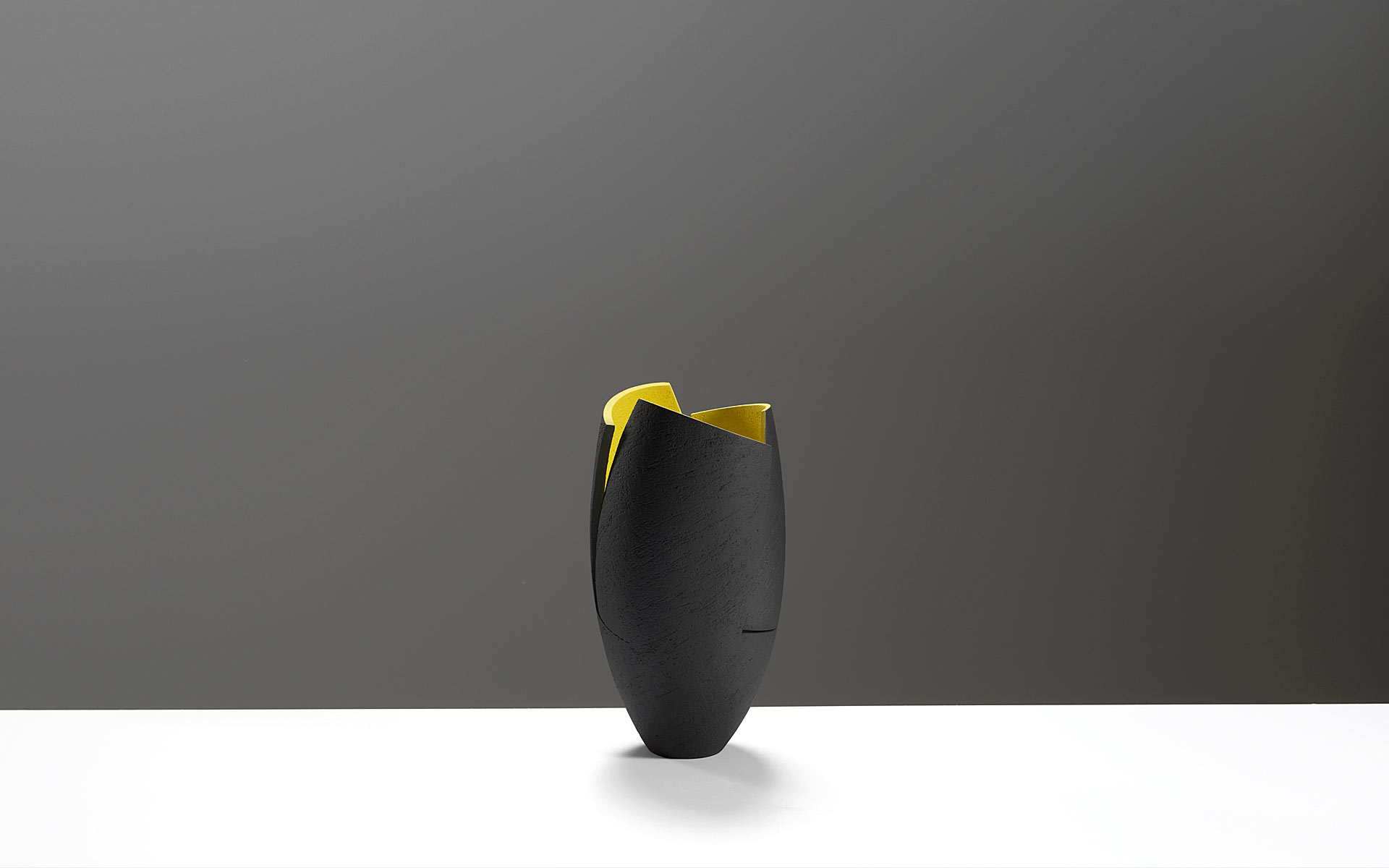
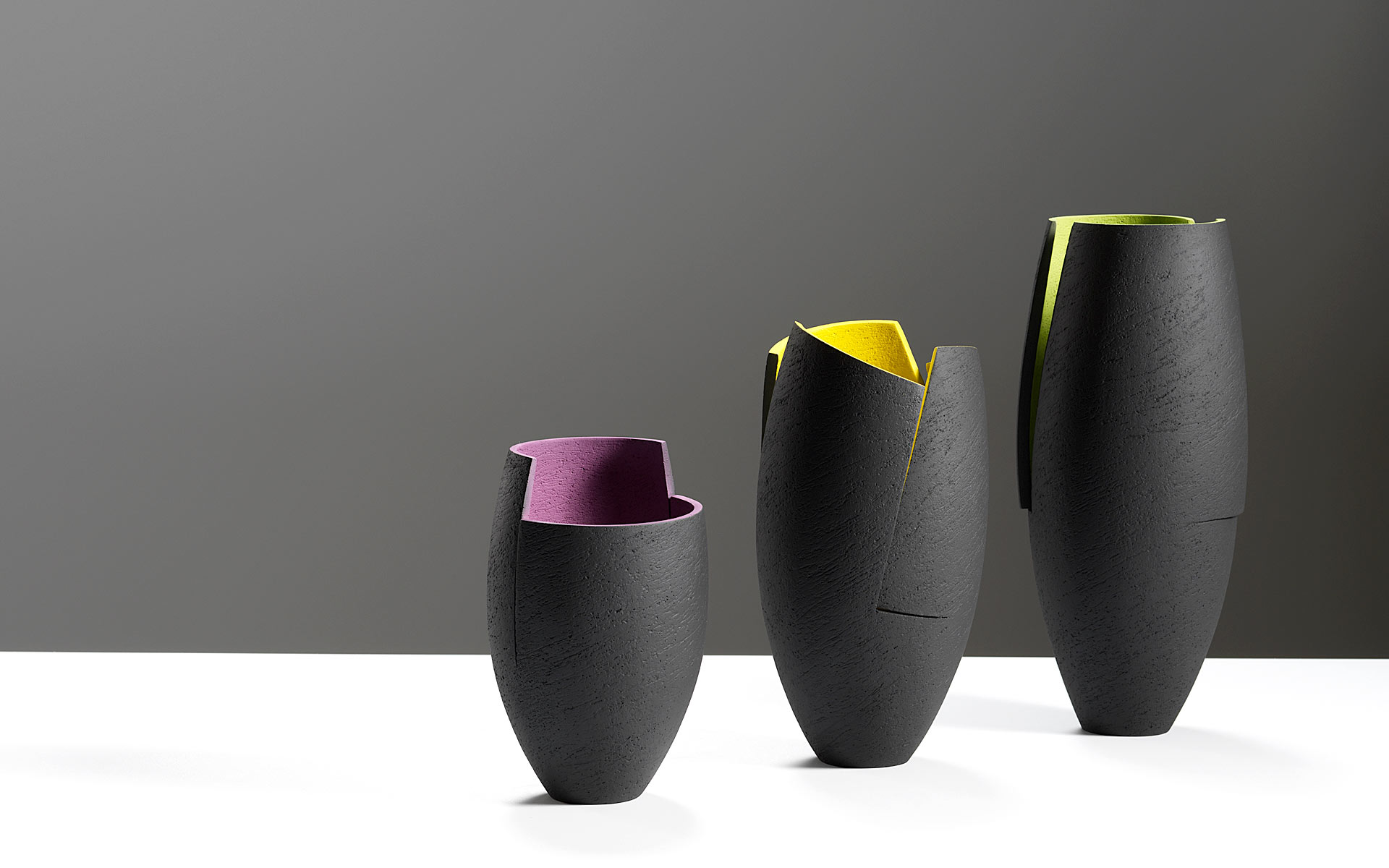
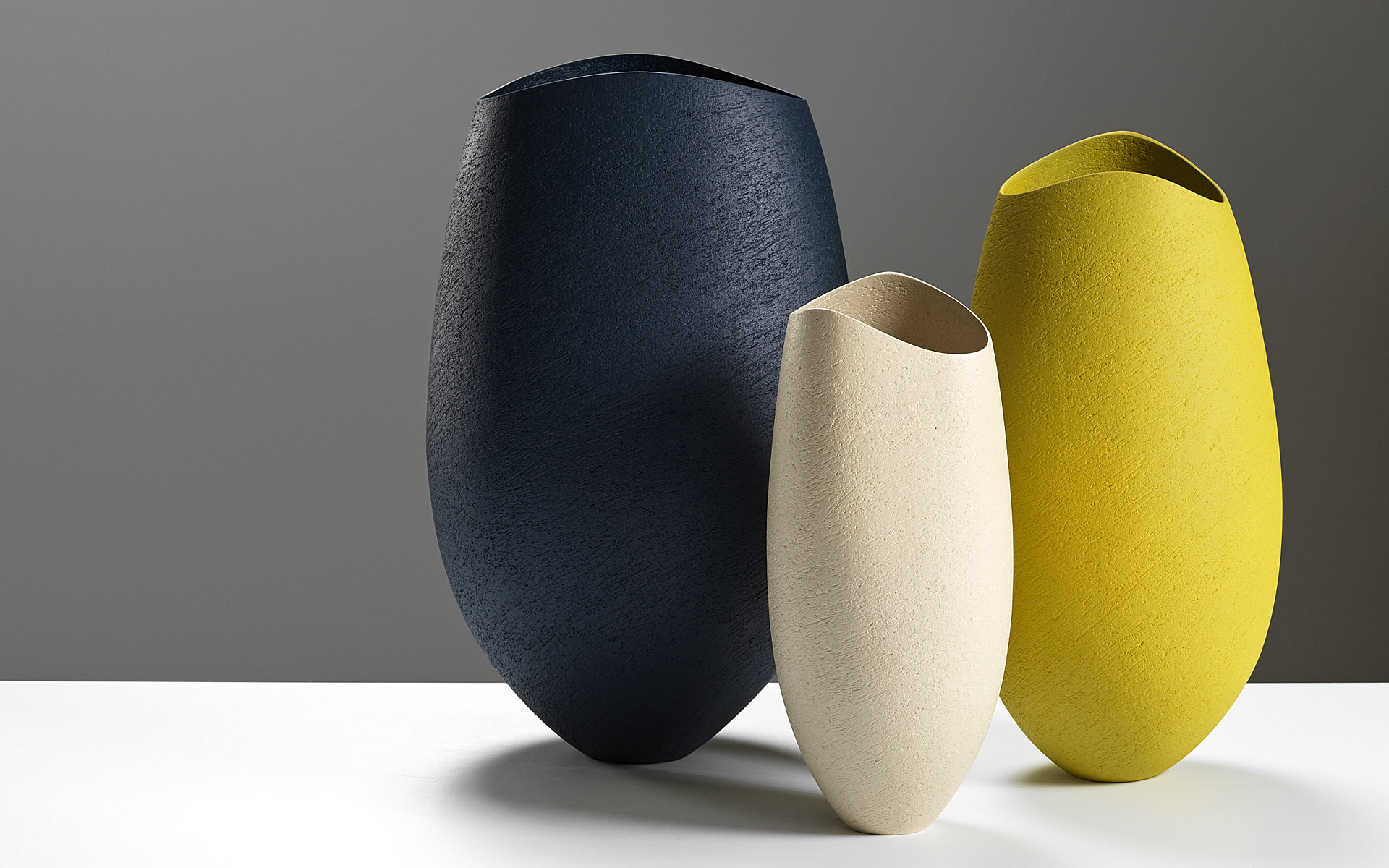
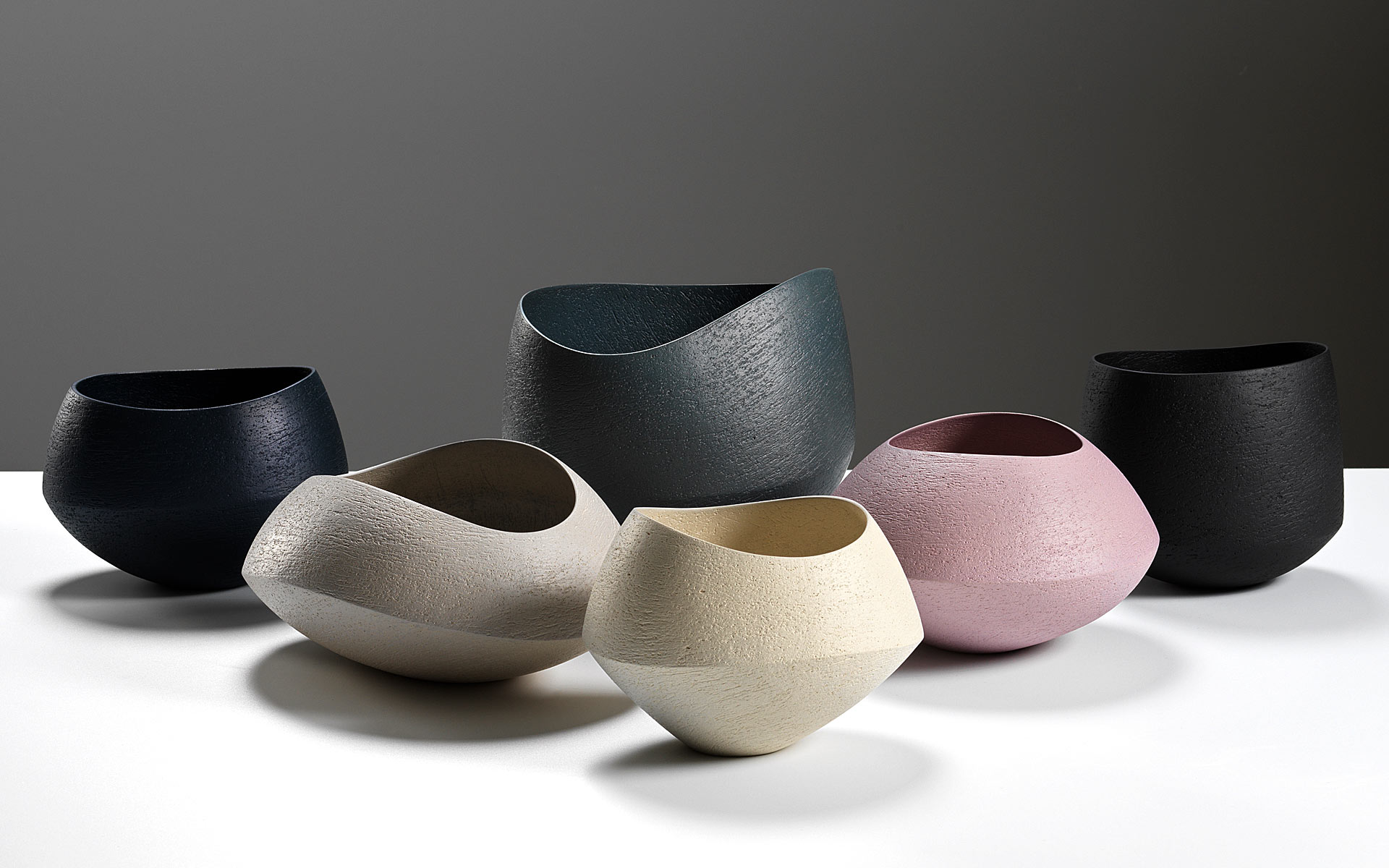
The body of work that was conceived during my recent MA at the RCA is concerned with exploring how scale, colour, texture and material inform our perception and understanding of form. The space an object occupies through its scale has a significant role in determining our relationship with it. Colour, whether bright, soft, intense or vivid has a powerful effect in defining its character. Textural treatment invites us to examine the tactile qualities of the surface and how this influences our ability to read and comprehend a form. This is further emphasized when choosing the material, whether solid, dense ceramics or translucent glass.
I am interested in the lines and spaces that develop through both the manipulation of the volume within forms and their relationship to one another. The interaction between sharp and organic lines creates subtle and sometimes pronounced curves that invite the eye to engage with the sculptural aesthetics of the form.
Other directions explored at the RCA included working with kiln cast glass and designing slip cast functional bowls.